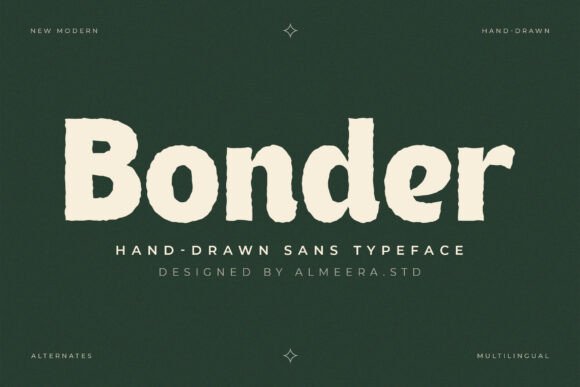
Bonder Font: A Chunky Sans Serif for Handmade Brands
The morning light hits the cutting mat just right as I peel back the transfer tape from a fresh batch of vinyl stickers. This is the moment where design leaves the screen and becomes something tangible. For my latest line of soy candle labels, I needed a typeface that could stand up to the texture of kraft paper while still feeling inviting and warm. That is when I turned to Bonder. This chunky, textured hand-drawn display sans serif wears its imperfections like badges of honor, instantly transforming a simple label into a piece of artisanal art. It strikes that elusive balance between approachable warmth and graphic boldness that so many of us chase in our small businesses.
When you are running a handmade shop, every detail counts. Your brand identity isn't just a logo; it is the font on your packaging, the text on your thank-you cards, and the lettering on your social media graphics. Bonder brings a specific mood to the table. It feels human. In a world dominated by perfect, geometric vectors, there is something deeply satisfying about a sans serif font that remembers it was drawn by a hand. The slight variations in stroke width and the organic edges give products a "crafted" feel before the customer even touches them. It tells a story of care and attention, which is exactly what we want our buyers to perceive.
Bringing Texture to Product Labels and Packaging
One of the most exciting ways to use Bonder is in packaging design. Because it is a display font, it shines brightest when used for short phrases, product names, or decorative wording. Imagine printing this onto matte sticker paper for a line of small-batch jams or artisanal soaps. The inherent texture of the font complements the physical texture of the materials. It does not look out of place on rough recycled paper or smooth glass jars. Instead, it bridges the gap between digital design and physical reality.
For those using Cricut or Silhouette machines, readability is key. While Bonder has a hand-drawn aesthetic, its structure remains solid enough for cutting. However, a word of advice for fellow makers: when scaling down for small product tags or tiny favor boxes, ensure the size remains large enough to preserve those charming imperfect details. If the text is too small, the unique character of the display font might get lost in the cut. It works best as a headline or a primary identifier, allowing cleaner, simpler fonts to handle the ingredient lists or instructional text below.
Elevating Stationery and Wedding Invitations
Moving from product labels to paper goods, Bonder finds a new home in the world of stationery. I recently mocked up a set of wedding welcome boards, and the font immediately established a tone that was festive yet grounded. It is perfect for couples who want a modern typography look without the coldness of standard geometric fonts. The warmth of Bonder makes it an excellent choice for birthday invitations, baby shower banners, and holiday cards.
When designing these items, consider how font pairing can enhance the overall composition. Since Bonder is bold and textured, it pairs beautifully with a delicate script font for names or dates, creating a dynamic contrast between structured and fluid. Alternatively, pairing it with a clean, thin serif font for the body text can create a sophisticated editorial look suitable for high-end event stationery. This versatility allows you to create cohesive suites for clients or your own shop offerings, ensuring that the creative font serves the message rather than overpowering it.
Digital Downloads and Printable Wall Art
The rise of digital downloads has opened new avenues for creators, and Bonder is a standout asset for printable wall art and planner pages. Its graphic nature makes it ideal for motivational quotes, nursery decor, or farmhouse-style signs that customers can print at home. The "imperfect" quality of the letters adds a layer of authenticity that mass-produced art often lacks. When customers download a file featuring Bonder, they are buying a piece of personality.
For printable creators, the utility of this typeface extends to template previews and listing images. Using Bonder in your mockups can help potential buyers visualize how the final product will look in their space. It draws the eye in thumbnail sizes on marketplaces, helping your listings stand out among sea of generic designs. Whether it is a seasonal holiday tag or a year-round planner cover, the font's bold presence ensures legibility and impact.
Merchandise and Apparel Design
Beyond paper and labels, Bonder translates exceptionally well to merchandise like tote bags, t-shirts, and mugs. The chunky strokes hold up well against fabric textures and curved surfaces. When designing for apparel, the goal is often to create a statement. Bonder acts as a graphic element in itself, meaning you often do not need additional illustrations to make the design pop. A simple phrase in this sans serif font on a canvas tote bag can become a signature item for a boutique.
However, always check the specific file formats and licensing terms included with your purchase. If you plan to sell physical products like shirts or mugs, or if you are creating digital templates for others to use commercially, understanding the commercial font license is crucial. Most premium fonts offer clear guidelines on what is permitted for physical goods versus digital redistribution. Ensuring you are compliant protects your business and respects the type designer's work.
Ultimately, incorporating Bonder into your creative workflow is about more than just choosing letters; it is about curating a feeling. It invites your audience to slow down and appreciate the handmade nature of your work. From the first glance at a shop banner to the unboxing of a carefully packaged order, this premium font helps weave a narrative of quality and charm. By leveraging its unique texture and bold personality, you can elevate your brand identity and create products that resonate deeply with your community of makers and buyers.